
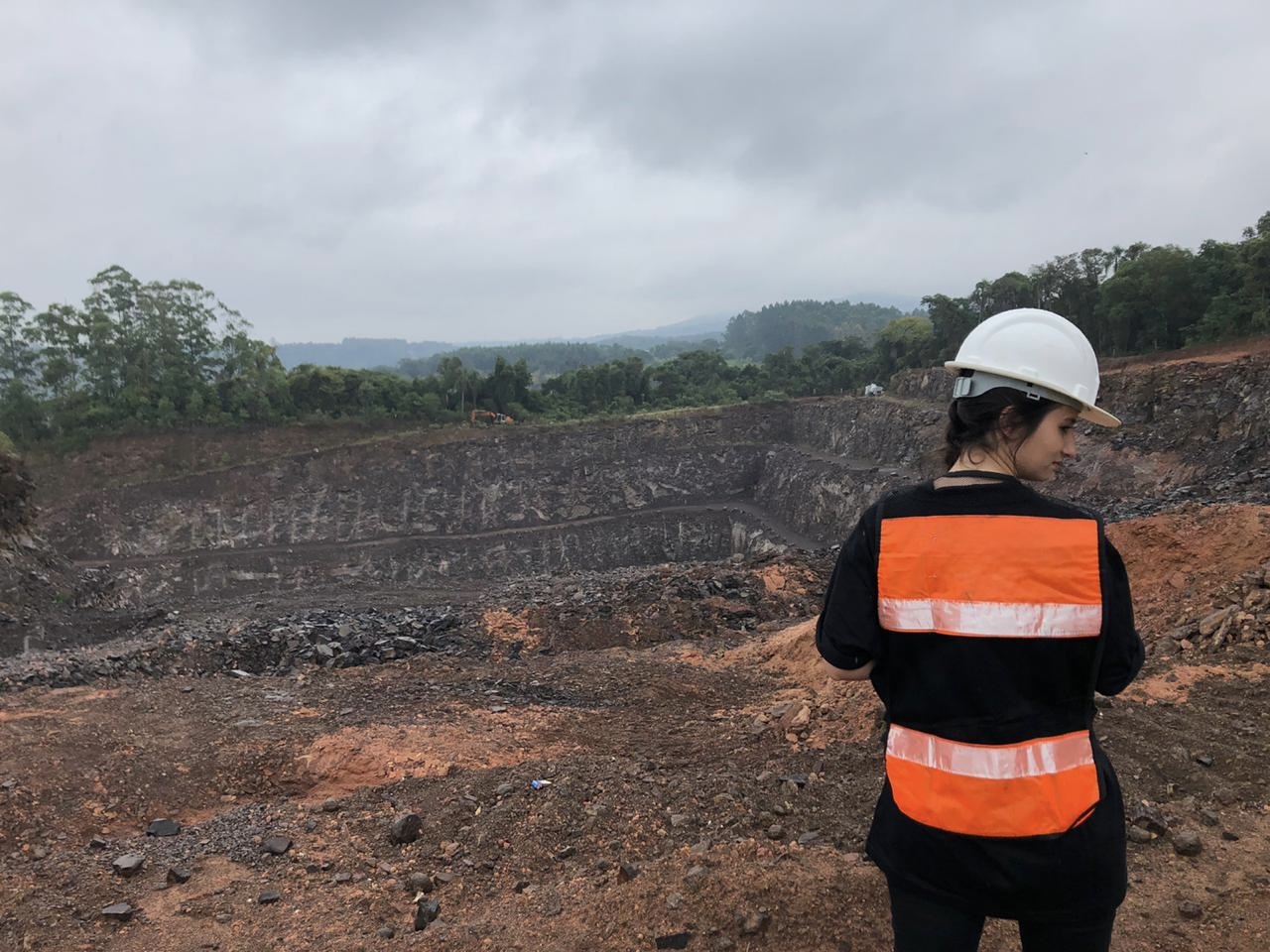
Before crypto, I was a mining engineer.
I mention it sometimes but I rarely talk about what that represents inside of me.
And there is one thing in particular from engineering that I carry into everything I do in web3, and after four years watching people and projects break for the same reason, I think it deserves its own article.
The Safety Factor
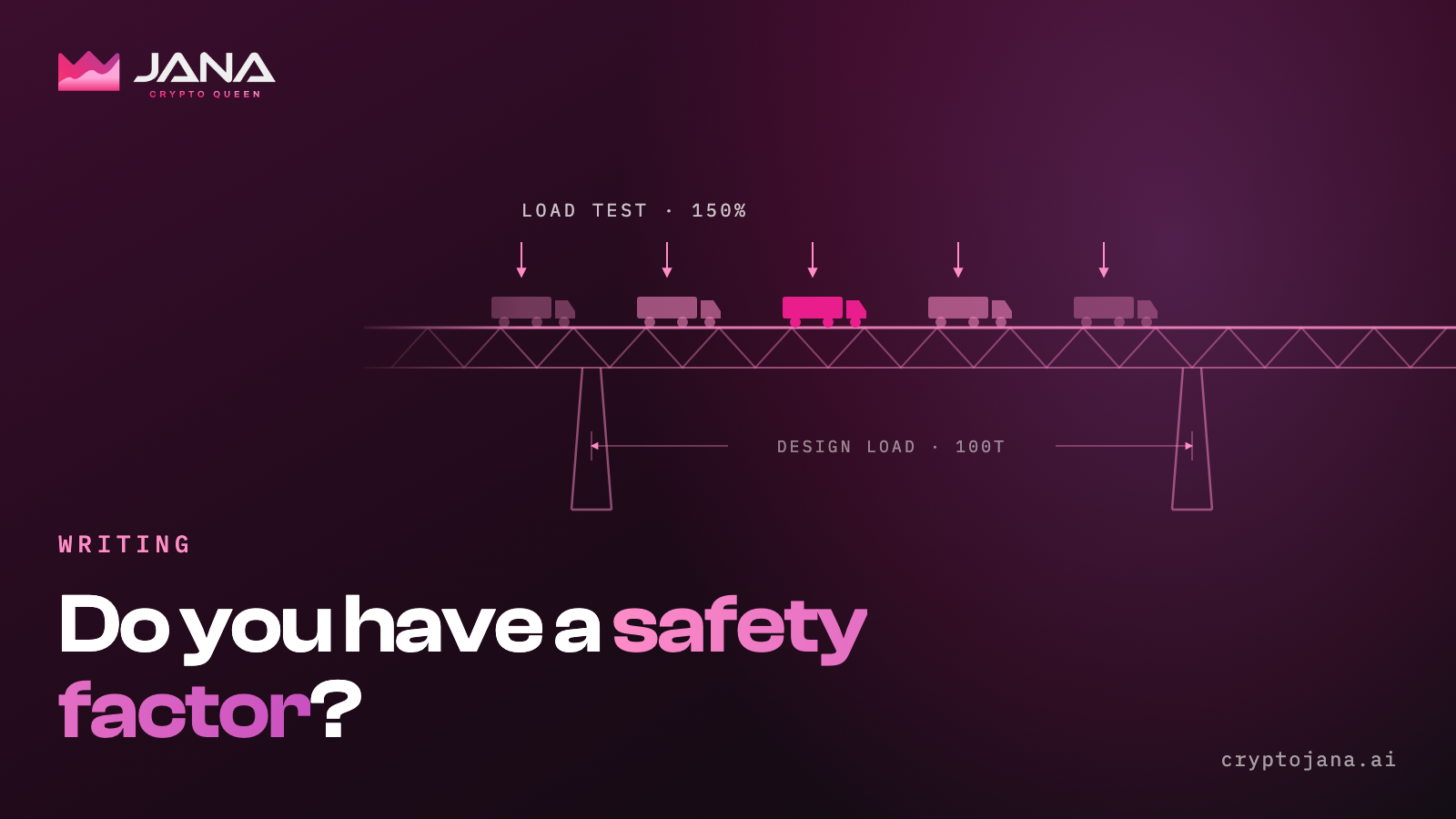
For the ones new to the concept, its quite simple: in engineering you never design something to hold exactly the load it needs to hold. If a bridge needs to carry 100 tons, we build it for 150, sometimes 200. The math says 100 is enough, yet we build for more anyway.
ALWAYS
And before a new bridge opens, we park lines of fully loaded trucks on it, on purpose, just to watch it hold a weight it will probably never see again.
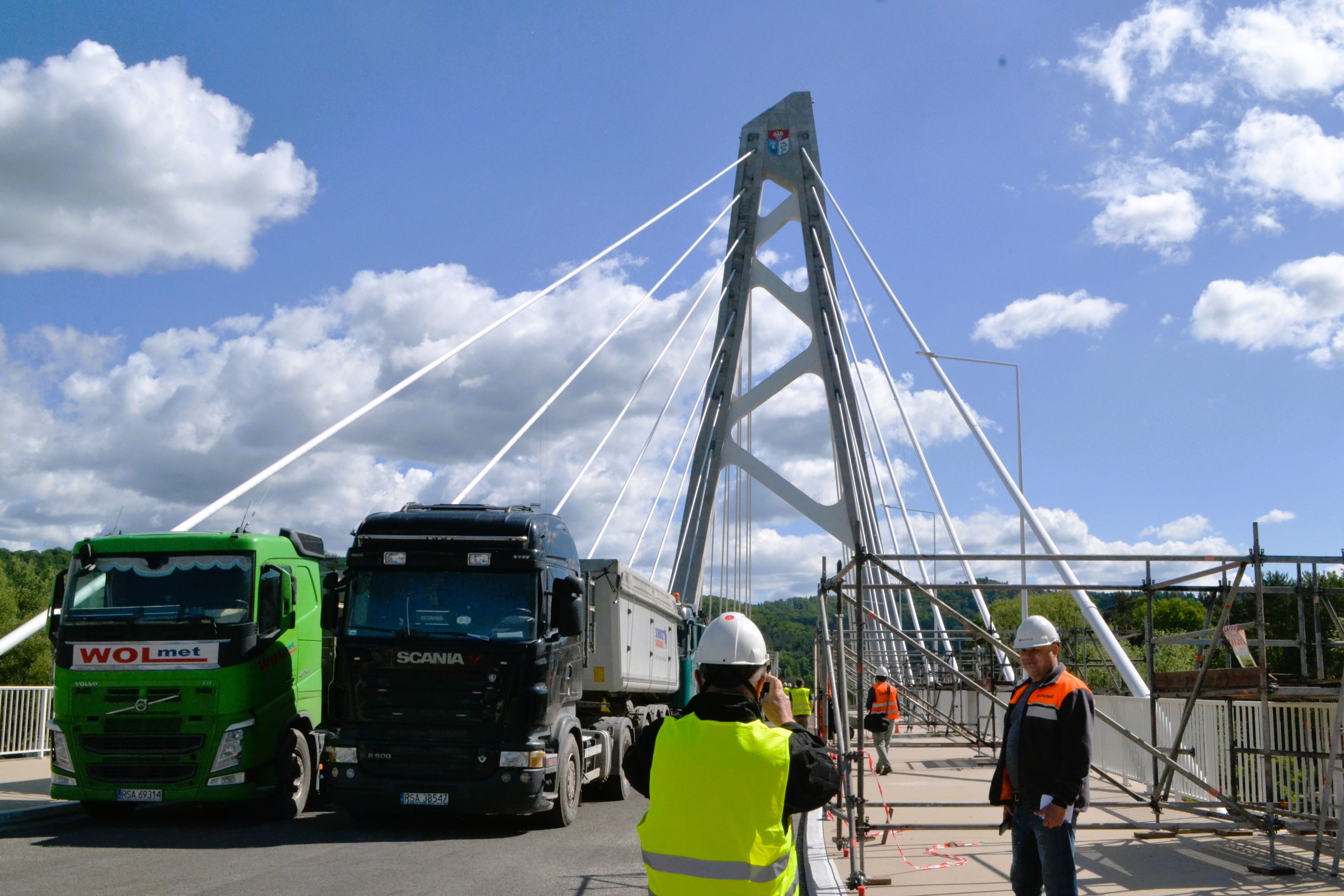
Source: Wikimedia Commons, load test of a new bridge in Sanok, Poland
Why is that you might think, sounds stupid use more material if less was enough, well...
The thing is that same as people, materials also fail, everything can fail.
In mining, the world I came from, you live inside this idea the whole day. The trucks are rated for more than they will ever carry, the cables hold more than they will ever pull, the walls of the pit are cut safer than the math asks. Not because we don't trust the numbers, but because everyone there knows that one day something will not behave like the paper said, and the margin is what sends everybody home that day.
That is the safety factor, the space we leave for the things we aren't predicting, so when one of them decides to happen, and it will, we are still standing.
Outside engineering we all do it all the time without noticing. If the drive takes one hour and you cannot be late, you leave 30 minutes earlier, simple.
Crypto Reality
In an almost comic way let's think on how we actually act in crypto.
We do the exact opposite. We plan as if the best scenario is the standard result.
Nobody here parks trucks on the bridge before crossing it. We drive in full speed, with everything we have on board, and we act surprised when it shakes.
Projects spending like the bull market is a permanent condition.
People going all in because someone sounded very sure.
Rent money, savings, loans, riding on an outcome that was never promised to anyone.
Whole communities counting on a listing that nobody ever confirmed.
New tokens treated like a retirement plan after one green week.
People copying a call from someone that never shows their losses.
And so on, the list keeps going.
And if you think the unexpected is rare here, the data is public. In one single day of October last year more than 19 billion dollars in positions were liquidated, over 1.6 million traders, the biggest liquidation day in crypto history. And it didn't come from anything crypto people were watching, it came from a tariff announcement between the US and China.
Like, really? who had a tariff war in their plan that day?
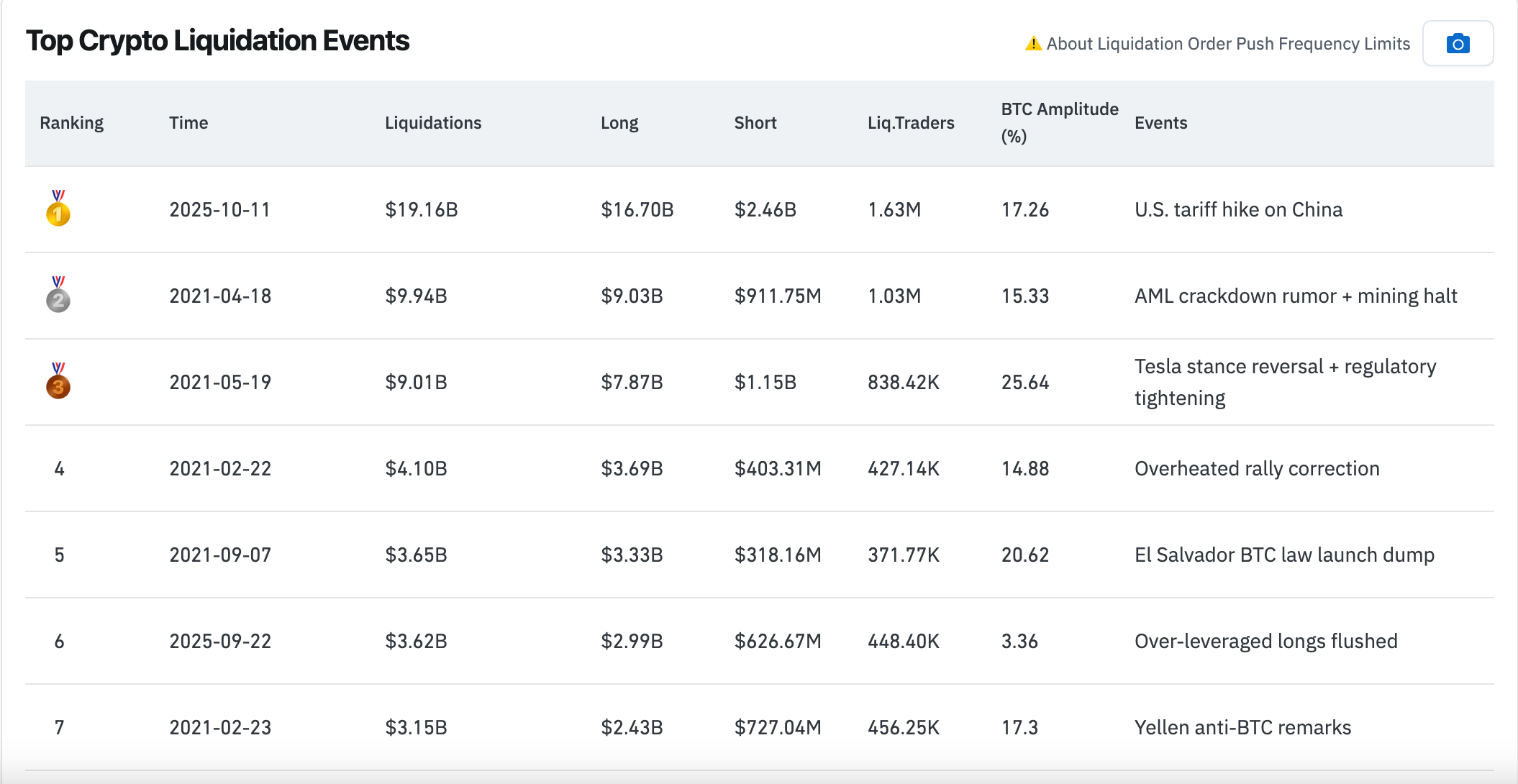
Source: Coinglass
I know what you might be thinking here, if I start planning for everything to go wrong, I will never take any risk, and without risk why even be in crypto?
You're totally right, what is life without risk? what is crypto without those tokens we just wish to pump hard?
Yet here is the tricky I brought from my engineer life: the safety factor in crypto, professional traders will also call this risk management.
Because in the end the safety factor was never about avoiding risk. Engineers take risk every single day, that is literally the job. The safety factor is what lets you take the risk and still be standing when something you didn't see coming shows up.
The projects side
I have worked with multiple projects these years and seen amazing ones survive and even better ones to die. And if you ask me the difference between the ones still here and the ones that disappeared is almost too simple to explain.
They rely on things that can't really persist. They rely on collaborations that never happened, in bull cycles to never end, in volume that keep growing, never expecting the opposite and when they do they still imagine opposite scenarios that aren't bad enough.
And I'm not talking about a few unlucky ones here. More than half of everything launched since 2021 is already dead, 53% of almost 20 million tokens, and more than 11 million of those died in 2025 alone.
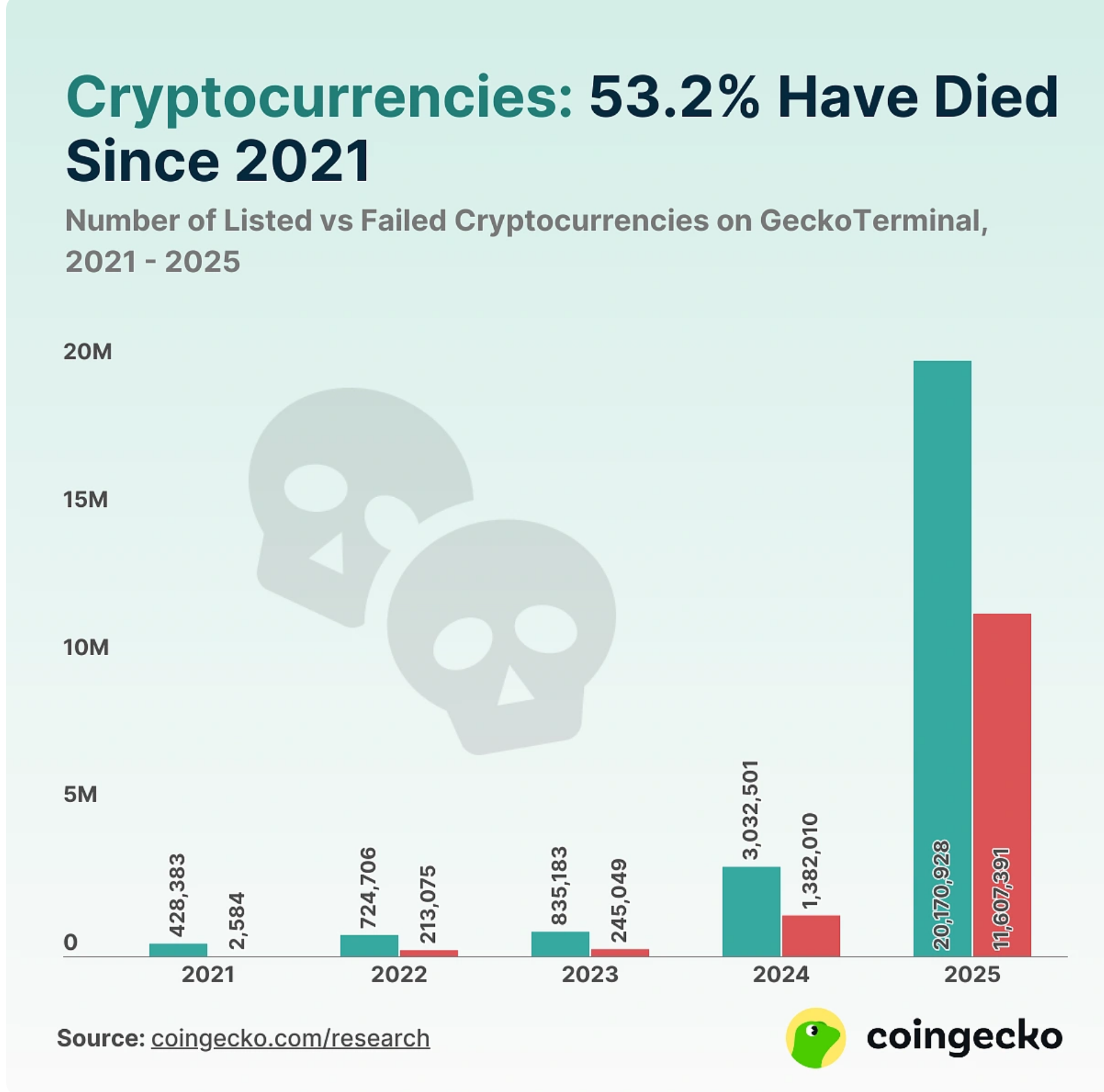
Source: CoinGecko
I know, most of these were never really serious, tokens launched with utilities no one understood or no reason to exist at all. But if you ask me the serious ones die from the same thing, just slower. The token with no reason to exist has no margin by design, the funded project with a team and a roadmap has a margin and spends it, believing the bull market would pay for everything, forever.
The ones I saw survive were rarely the loudest. They were the ones that knew exactly how long they could keep building if nothing went right for a year, or two.
As humans
As humans I look at this with even more kind eyes as in the end we humans are just one and we take our decisions based on our beliefs and experience, different from a whole project with multiple individuals to help you in that.
We look into the meme meta that just look perfect, you feel sure this couldn't not pump, in the end you have seen so many other pumping so much, you know this one will happen.
well....
after a while living through my own experience and seeing so many others living through you see clearly how we get blind as fast as trends come and go.
And this is not even a crypto invention.
This chart is from 2008, drawn from bubbles much older than any of us here, even crypto.
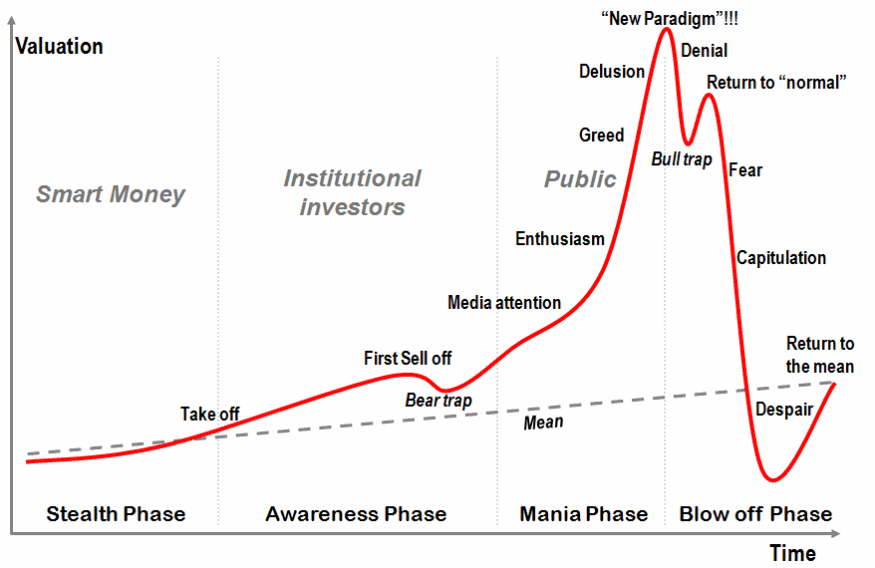
Source: Jean-Paul Rodrigue, the phases of a bubble
Look at "New Paradigm" the exact moment everyone is finally sure this time is different is right at the top, precisely right before the fall.
And I won't stand here like I'm outside of this, I feel the pull too when everything around looks like it can only go up.
The difference is that somewhere in these four years I realized I never stopped carrying the engineer with me.
My safety factor
My income came from work and from people, and I never put on the table something that would end me if it went to zero.
I see this daily with people and traders that bet it all, try it all without ever considering the opposite scenario, not even in these current circumstances we live with which almost everything feel like it will fail at some point, we keep pretending it won't.
With memes heating again you now feel the pull to just join and follow, get your stable to work for you, right?
well, remember the tokens winning, the people winning, they are all a surface of a bubble that is dense and huge, all the inside is losing, is grinding for nothing, while exceptions will forever keep existing we just can't rely on their existence in our life so then we could make it, we just can't.
There is even a name for this trap we fall into, survivorship bias, and engineers know it since the second world war.
Back then they studied the planes that came back from battle covered in bullet holes, to decide where to add more armor. The first instinct was to armor where the holes were. Until one mathematician, Abraham Wald, pointed at what nobody was seeing: the holes only show where a plane can be hit and still fly home. The planes hit anywhere else never came back to be counted.
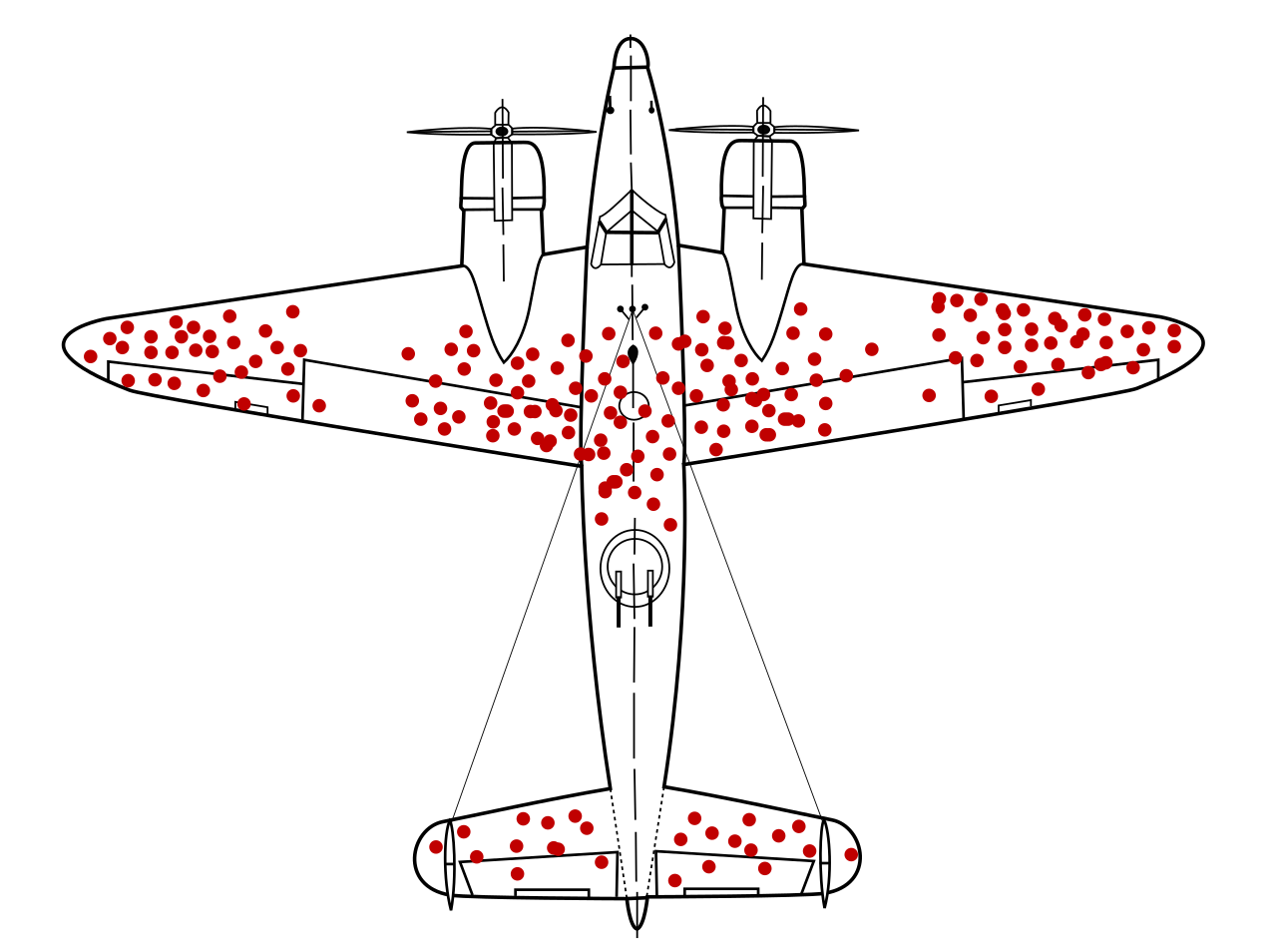
Source: Wikimedia Commons, the WW2 planes study
And that is exactly what your timeline does to you every day, it shows you only the planes that came back.
The one question
In practice it is just one question, asked before any move:
what happens to me if this goes wrong?
Before buying that token: can I lose this and still pay my bills?
Before quitting the job: can I survive a year if nothing works?
Before following the meta: would I still be here if I hadn't seen everyone else winning?
If the answer scares you it doesn't mean stop dreaming. It means adjust the size of the move until you can survive the worst scenario, and then you go.
In crypto I learned to move this way, if you want to succeed be always thinking in the next step, always prepared for what can go wrong when everybody else is blind with noise.
OFC DON'T FORGET TO SHARE!!
References
Factor of safety, the engineering concept: en.wikipedia.org/wiki/Factor_of_safety
The first version of this idea, my original post from November 2024: x.com/JanaCryptoQueen
Bridge load test photo: Wikimedia Commons, "Test trucks during load testing of the new bridge in Sanok" by Marsilar, CC BY-SA 4.0, commons.wikimedia.org
October 2025 liquidation event data: Coinglass, Top Crypto Liquidation Events, coinglass.com
Coverage of the October 10-11 2025 liquidation event: CoinDesk Research, coindesk.com and CNBC, cnbc.com
Dead tokens data: CoinGecko Research, "Dead Coins: Over 50% of Cryptocurrencies Have Failed" (updated April 2026), coingecko.com
Phases of a bubble chart: Jean-Paul Rodrigue, 2008 (attribution license), commons.wikimedia.org
Survivorship bias illustration: Martin Grandjean / McGeddon, CC BY-SA 4.0, based on Abraham Wald's 1943 WW2 aircraft study, commons.wikimedia.org