
The 5.5 billion people who live in countries where the financial system doesn't just fail occasionally, it's designed to fail them.
Rich countries will always find ways to get richer. They have the infrastructure, the institutions, the regulatory frameworks. Crypto is just another tool in their arsenal.
But for the 70% is a different story...
The 5.5 billion people living on less than $20/day, those in lower-middle-income and low-income countries where inflation routinely hits double digits, where currencies collapse, where banks fail and governments restrict capital.
Crypto isn't about portfolio diversification or new potential growth asset. It's about survival.
The Data Proves It
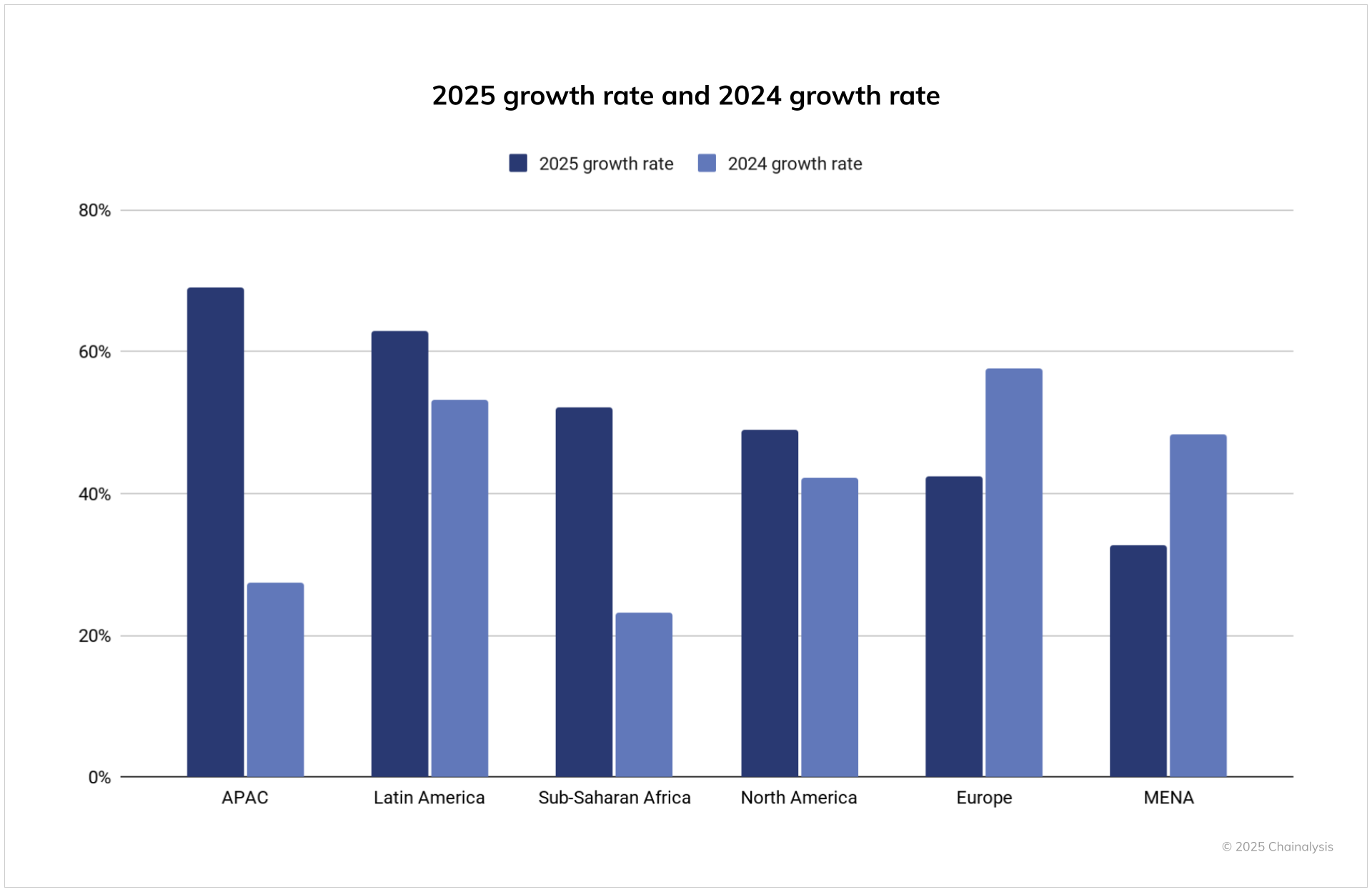
Latin America's crypto adoption grew 63% year-over-year - the second-fastest growing region globally, outpacing Europe (42%) and North America (49%). This isn't speculation driving growth only, it's real necessity.
When your government can't, or won't, fix the broken system you have two options:
• Your country stays poor
• But YOU don't have to
That's the angle the crypto industry missed.
Poor countries may never "fix" their economies...
Their governments may never stabilize their currencies...
Their institutions may never become trustworthy...
But their people can escape anyway.
• You can't fix Argentina's inflation - but you can protect your savings with Bitcoin
• You can't fix Venezuela's currency collapse - but you can transact in stablecoins
• You can't fix Nigeria's capital controls - but you can send remittances peer-to-peer
The Real Tool: Stablecoins
And the tool of choice? Stablecoins.
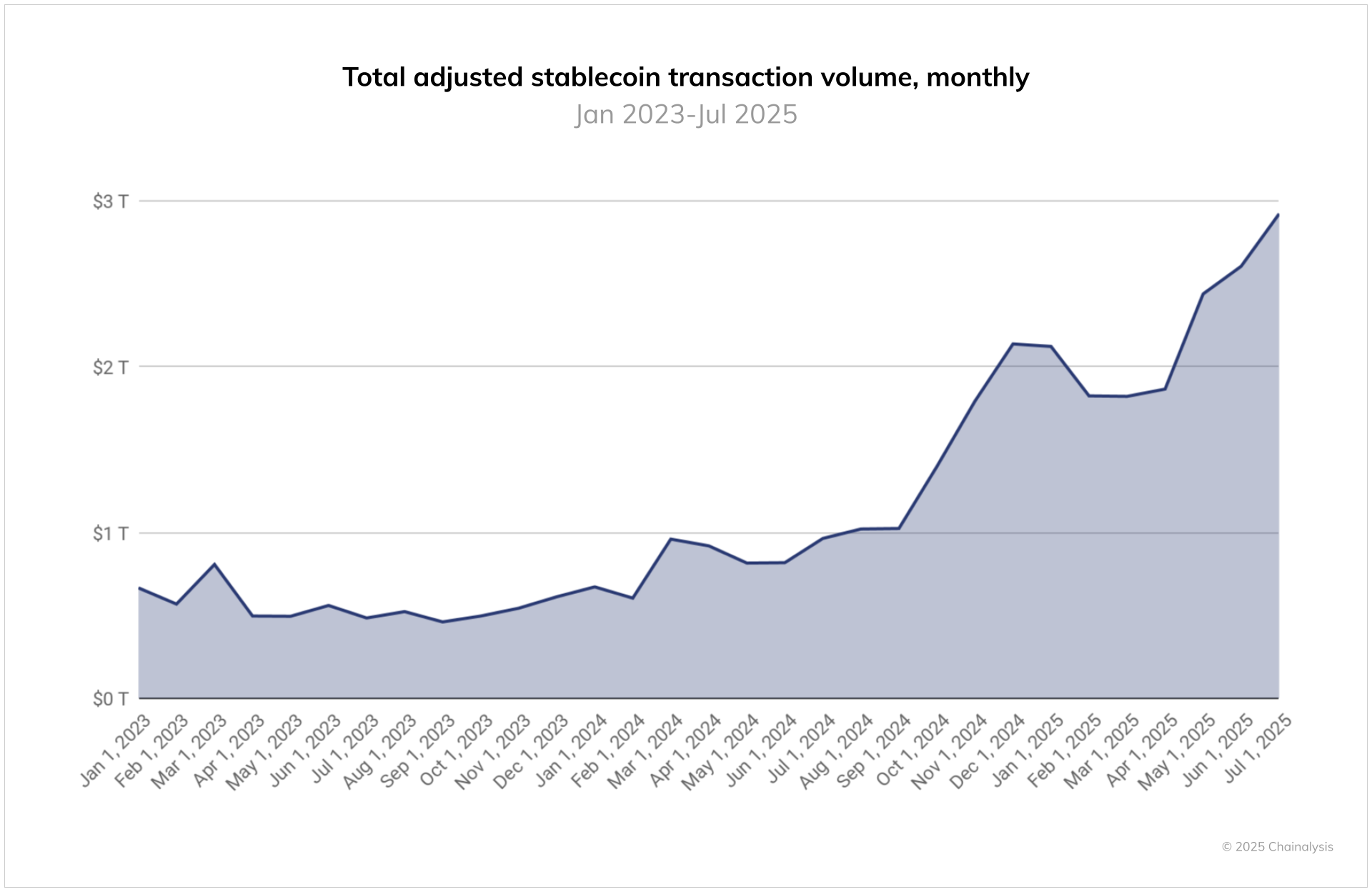 While Bitcoin gets the headlines, USDT and USDC dominate actual transaction volume - averaging $703 billion per month for Tether alone. In Latin America, stablecoins aren't an investment. They're a way to escape local currency collapse without leaving your country.
The country fails. The individual survives.
Crypto gives people the ability to opt out of their local system without leaving their country. That's the revolution nobody in Silicon Valley understood.
While rich countries debate regulation and ETFs, poor countries are using crypto to eat.
References
1. Chainalysis 2025 Global Crypto Adoption Index
https://www.chainalysis.com/blog/2025-global-crypto-adoption-index/
2. Chainalysis 2025 Geography of Cryptocurrency Report
https://go.chainalysis.com/2025-geography-of-cryptocurrency-report.html
3. World Bank - Poverty Overview
https://www.worldbank.org/en/topic/poverty/overview
4. World Bank - World Development Indicators
https://datatopics.worldbank.org/world-development-indicators/
5. Our World in Data - Poverty Statistics