
Time to face one of the biggest lies in crypto that a blockchain can "solve everything."
You can't have it all: fast, secure and decentralized.
No chain nails all three.
That's the Blockchain Trilemma.
Here's why it matters every time a new chain promises you the moon.
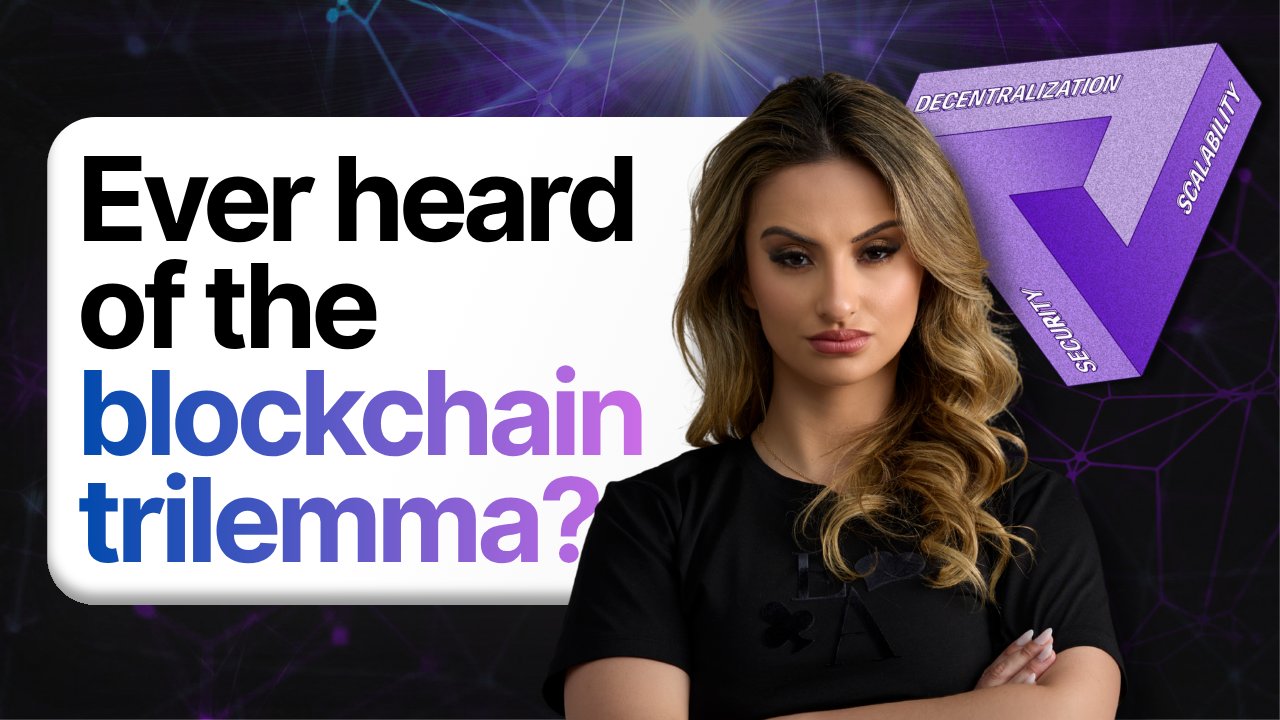
From Jana's original thread on X, Nov 6, 2025. Source: @JanaCryptoQueen
What Is the Blockchain Trilemma?

Security, Decentralization, Scalability — pick two. Source: @JanaCryptoQueen
The Blockchain Trilemma is quite simple actually.
You want scalability, security, and decentralization. But you can pick only two.
Bitcoin chose security and decentralization, sacrificing speed. Every chain makes this trade-off. They just market it differently.
The "Solutions" Are Actually Just Relocations
Every new blockchain or consensus mechanism that claims to "solve" the trilemma is lying to you. Not because they're bad, but because it's not actually possible. They're just relocating the problem.
It's like saying you solved traffic by building a highway. You didn't eliminate cars. You just moved them somewhere else.
Layer 2s: We Moved Centralization Upstream
Take Layer 2s like Arbitrum, Optimism, and Base. They batch thousands of transactions off-chain, then post a summary to Ethereum. Sounds great, right?
Until you realize one centralized sequencer orders all your transactions. We didn't solve centralization. We just moved it upstream.
Sharding: We Moved the Security Problem
Sharding splits the network so validators only process part of the data, boosting speed. But now each piece is less secure than the whole.
Attack one shard, compromise the system. The trilemma didn't disappear. It just became "how do we keep individual shards secure?"
The "More Hardware" Approach (Solana, Sui, Aptos)
Then there's the hardware approach. Massive speed by requiring validators to run expensive, powerful servers. Great for TPS.
Terrible for decentralization, because only wealthy entities can afford to validate. Different corner. Same triangle. 🤷🏻
The Uncomfortable Truth
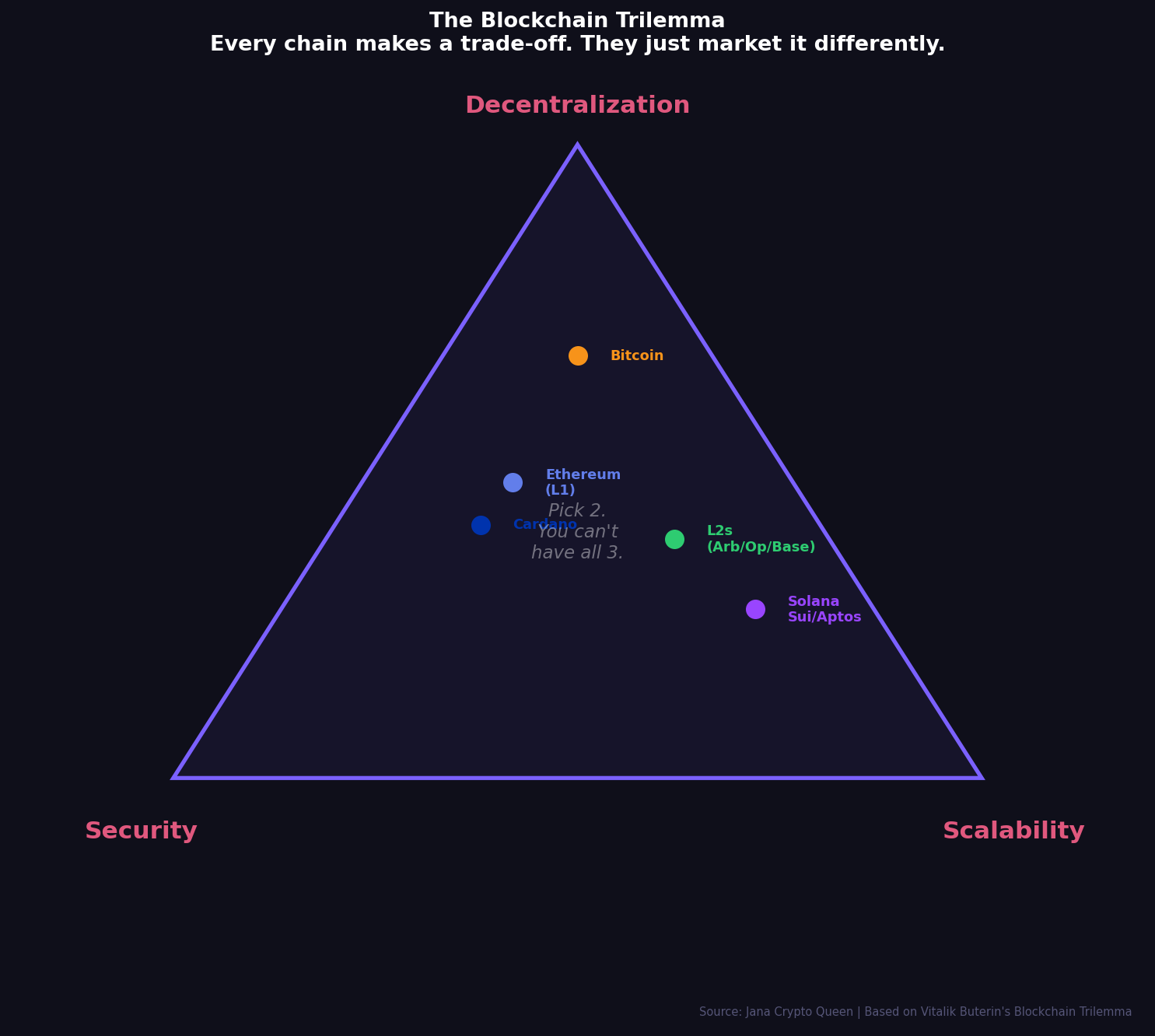
Source: Jana Crypto Queen, based on Vitalik Buterin's Blockchain Trilemma framework.
The trilemma isn't a bug. It's physics.
Like trying to make something cheap, fast, AND high quality. You can't have it all. Every "breakthrough" just repackages the compromise with better marketing.
What This Means for You
Next time someone claims to be "the fastest" or "most decentralized" chain, you'll know how to read between the lines.
Stop looking for the one that solved it. Start asking: where did they move the trade-off, and does that fit this use case?
That's the question that separates investors who understand this space from ones who just follow hype. 💎
References
Vitalik Buterin's Original Blockchain Trilemma Post
Ethereum L2 Sequencer Centralization — L2Beat